


Musk Compensation Package Finalized and SpaceX Listing
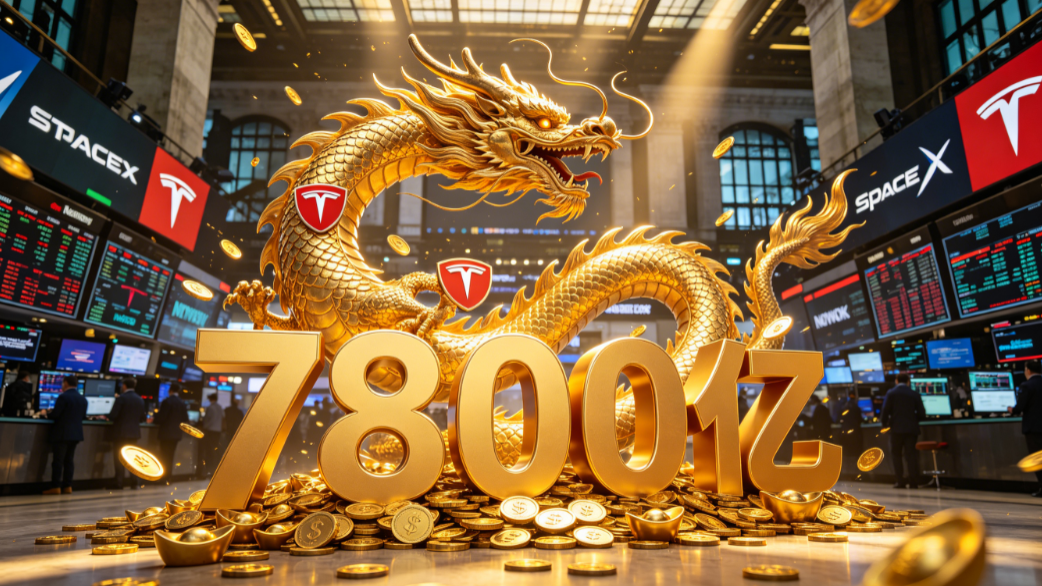
Musk Compensation Plan Realized and SpaceX Listing: Governance Logic and Capital Market Significance Behind Mega Wealth
Keywords: Tesla, Elon Musk, Compensation Plan, SpaceX Listing, Trillionaire, Corporate Governance, Equity Incentive, Capital Markets
Introduction
Recently, Tesla's filing with the U.S. Securities and Exchange Commission (SEC) disclosed that CEO Elon Musk realized his 2018 compensation plan on June 16, netting approximately 286 million Tesla shares with a book gain of up to $116 billion. This event not only basically settles the years-long compensation controversy but also once again focuses global capital markets on Musk himself and the business empire he dominates.
Beyond Tesla, SpaceX's post-listing performance also attracts widespread attention. Although its stock price is volatile, the scarce tradable float, strong market expectations, and the imagination space for future commercial aerospace have pushed Musk's personal wealth to new heights. With the Tesla compensation plan realized and SpaceX's market value climbing, Musk is not only considered one of the most influential entrepreneurs globally but also a typical example of the "super founder" wealth effect in contemporary capital markets.
I. Tesla Compensation Plan Realized: The End of a Six-Year Controversy
According to the filing, Musk exercised 304 million stock options at a split-adjusted exercise price of $23.34 per share, while Tesla's closing price on June 16 was $404.66 per share, creating a huge spread of $381.32 per share, resulting in a book gain of approximately $116 billion for the single transaction. The scale of such compensation realization is extremely rare in global corporate history.
It is worth noting that this is not simply "cash compensation" but a typical equity incentive arrangement. Under the implementation agreement, Musk used a "net settlement" method, with Tesla withholding 17.5319 million shares to cover exercise costs, meaning Musk netted about 286 million shares. Meanwhile, these shares are restricted shares subject to service tenure requirements and are expected to be saleable only in 2028. Therefore, despite the stunning book gain, the actual monetization pace remains strictly constrained.
The reason this compensation controversy draws attention is not just the huge amount, but that it touches on core issues such as corporate governance, board independence, and shareholder rights protection. Earlier, the Delaware Chancery Court had rescinded the compensation plan, finding conflicts of interest on the board and shareholder deception; later, the relevant ruling was overturned on appeal, finally closing the case. To the outside world, this process reflects the complexity of governance structures in large U.S. tech companies and shows that the influence of super founders often extends to every level of compensation, decision-making, and capital structure.
II. The Other Side of Equity Incentives: High Risk, High Ties, Strong Constraints
From a business logic perspective, Musk's compensation arrangement is not a traditional "high salary" but an incentive mechanism highly bound to Tesla's market cap, operating performance, and long-term goals. In other words, if the company fails to achieve corresponding growth, this compensation plan would be difficult to realize. Therefore, supporters argue that it is essentially a reward for the founder's long-term value creation ability and a way to deeply align management interests with shareholder interests.
However, the other side is also worth vigilance: when equity incentive scales are too large and personal power too concentrated, corporate governance may face new challenges. First, when designing incentive plans, the board can easily be influenced by the founder, making it difficult to remain fully independent. Second, while equity incentives help lock in key talent, over-reliance on a single leader's personal reputation and decision-making ability may lead to deficiencies in institutionalized governance, organizational succession, and risk diversification. Third, when the market highly ties "founder halo" to enterprise value, stock price fluctuations become more sensitive, and investors can easily amplify emotions between expectation and reality.
Musk currently holds approximately 700 million shares of Tesla common stock, representing 19.9% ownership, still wielding extremely strong influence in the company. In addition, he holds about 424 million restricted shares under the 2025 CEO performance award plan. According to relevant voting arrangements, the voting rights for those shares that have not yet met performance conditions must be exercised in proportion to the voting of other shareholders, and the voting rights have been entrusted to Tesla's corporate secretary. This arrangement shows that even with enormous equity, some of Musk's rights are still subject to institutional constraints, reflecting the balance attempt between "incentivizing founders" and "preventing power imbalance" in corporate governance.
III. SpaceX Listing: From Valuation Myth to New Capital Market Sample
If Tesla's compensation realization reflects "confirmation of past value," then SpaceX's listing is more like a "bet on future value." According to market information, SpaceX's stock price was volatile in its first week of listing, experiencing both a clear pullback and a significant gain above its IPO price. Despite short-term instability, SpaceX has become one of the most watched star companies in global capital markets in terms of total market value.
The core reason SpaceX can achieve such a high valuation lies in the scarcity and imagination space of its track. Businesses such as commercial aerospace, satellite internet, deep space exploration, and rocket recovery not only have high technical barriers but also carry industry expectations for the next decade or even longer. Especially as global capital continuously seeks investment opportunities in "next-generation infrastructure," SpaceX's emergence happens to meet the market's pursuit of high-growth, high-tech, high-barrier assets.
However, SpaceX's high valuation also means high expectations. The sharp stock price fluctuation in the first week of listing indicates that the market still has differences over its fundamentals: on the one hand, the company has strong competitiveness in technology, orders, and industrial position; on the other hand, the excessively low tradable float and strong speculative demand can easily cause short-term price deviation from intrinsic value. In other words, SpaceX's market performance is both a reflection of the scarcity of tech assets and an exposure of the irrational side of capital market pricing for "star enterprises."
With Musk holding about 4.8 billion SpaceX shares, representing about 42% of the company, the Bloomberg Billionaires Index shows his personal wealth has surpassed $1 trillion, making him the world's first "trillionaire." As of June 20, his net assets were approximately $1.23 trillion. This number is not only strongly symbolic but also marks the world's wealth distribution entering an unprecedented concentration phase.
IV. Insights from the Trillion-Dollar Wealth Era: Innovation-Driven and Governance Constraints Coexisting
The rapid expansion of Musk's wealth, on the surface a personal success story, is essentially the result of the combined effect of technological innovation, capital markets, and institutional arrangements. Tesla represents the new energy vehicle revolution, SpaceX represents the breakthrough in commercial aerospace, and both companies have strong industry penetration and technological disruptiveness. Musk's ability to continuously bet on multiple high-barrier tracks and gain returns shows that super-innovative enterprises have extremely high premium capacity in modern capital markets.
But at the same time, trillion-dollar wealth also raises new governance propositions. How to balance encouraging innovation and rewarding entrepreneurial risk-taking with maintaining market fairness, board independence, and shareholder rights will become an important issue for future regulation and corporate governance. For investors, understanding the value of such enterprises requires looking beyond short-term stock prices to their business models, governance structures, and long-term execution capabilities. For the market, the success of star companies may be worth celebrating, but the concentration trend and power structure behind them also deserve ongoing scrutiny.
Conclusion
Musk's realization of the 2018 Tesla compensation plan marks the end of a multi-year controversy; SpaceX's post-listing market performance further pushes his wealth to historical highs. The two events together constitute a clear signal: in the contemporary tech-capital era, the most valuable assets are not only technology, products, and market share, but also the ability to continuously create the future through innovation and organization.
However, the formation of massive wealth is not just a "victory story"; it is also a real test of governance, incentives, risk, and power boundaries. Musk becoming the world's first "trillionaire" is both proof of individual and corporate capabilities and a sign that capital markets have entered a new phase. In the future, whether for Tesla or SpaceX, what truly determines long-term value will be whether innovation can be sustained, governance can remain robust, and the market can maintain balance between enthusiasm and rationality.

Disclaimer: This article is for reference only and does not constitute investment advice. Investment involves risks, please invest cautiously.
US Stocks Kick Off August with Volatility: Nasdaq Consolidates at Highs, Rotation Shifts to Defensive Sectors – How Should Asian Investors Respond?
2026-08-05
Fed Holds Rates Steady, Hints at September Cut; U.S. Stocks Rally Across the Board
2026-07-28
Tech giants' earnings beat expectations, pushing US stocks to record highs; Nasdaq leads global markets
2026-07-27