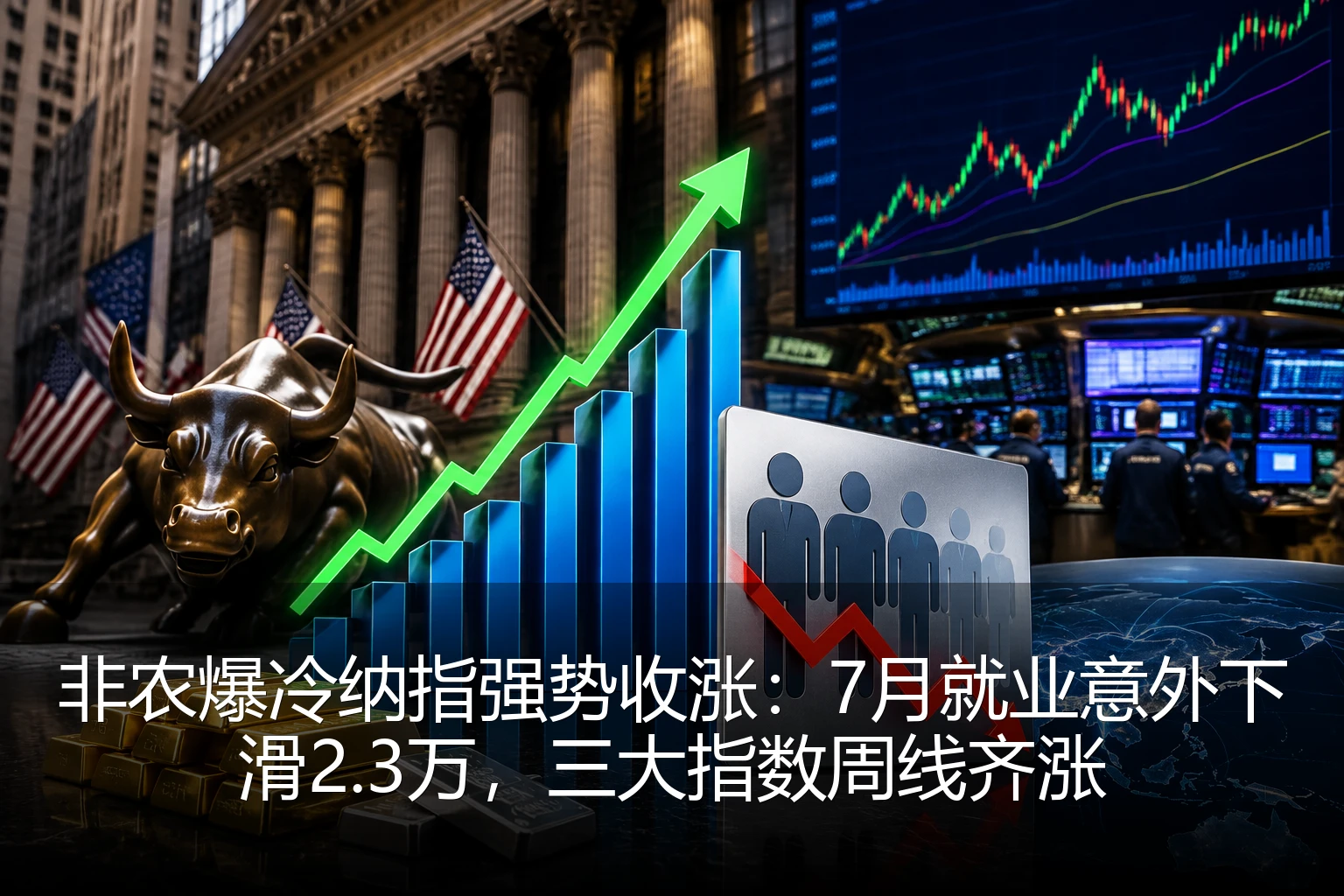


Nasdaq High-Level Volatility: US Stock Market Dynamics in Mid-August and Asian Investor Strategies
As mid-August 2026 approaches, the US stock market presents a complex and ever-changing landscape. After a strong rally earlier, the Nasdaq index has entered a high-level consolidation phase, while Asian investors are reassessing their US allocation strategies at this critical juncture. This article will analyze current US market dynamics, explore the logic behind tech stock trends, and provide practical allocation recommendations for Asian investors.
Market Overview: Nasdaq Volatility at High Levels, Clear Sector Rotation
As of August 15, 2026, the three major US indices have shown divergent performance. The Nasdaq index oscillates around the 24,000-point mark, the Dow Jones Industrial Average remains relatively stable, and the S&P 500 index shows moderate performance. This divergence reflects different market expectations for various asset classes.
Technically, the Nasdaq index has shown clear volatility characteristics recently. After breaking through the 24,000-point level in July, the index encountered corrections in early August, falling to as low as 23,500 points. Subsequently, driven by tech stocks, the index rebounded to the 23,800-point area, but faces resistance at the 24,000-point psychological level.
Notably, market sector rotation is evident. AI-related sectors that performed strongly earlier have recently diverged, with some overvalued individual stocks starting to pull back, while cloud computing and enterprise software sectors have shown relative stability. Meanwhile, traditional value sectors such as finance and energy have performed recently, attracting some defensive capital inflows.
Capital Flows: AI Cooling and Rise of Defensive Sectors
According to the latest capital flow data, the US stock market in mid-August shows significant capital rotation characteristics. The previously over-hyped AI-related sectors have cooled down, with capital partially shifting from overvalued tech stocks to more defensive sectors.
- Cloud computing and enterprise software sectors continue to receive capital inflows, reflecting stable corporate IT spending
- Healthcare sector performs notably, especially in biotechnology
- Defensive sectors such as consumer staples and utilities attract defensive capital
- Financial sector valuation recovery as interest rate environment clarifies
This capital rotation reflects a reassessment of economic prospects. Although US economic data shows certain resilience, investor concerns about the sustainability of economic growth have increased, prompting capital to shift from high-growth, high-valuation tech stocks to more defensive sectors.
Tech Stock Trends: AI Divergence, Cloud Computing Stability
As the main component of the Nasdaq index, tech stock trends have a decisive impact on the overall market. In mid-August, tech stocks have shown clear internal divergence, with AI-related sectors facing increased adjustment pressure, while cloud computing and enterprise software sectors have shown relative stability.
AI Sector: From Frenzy to Rationality
After the crazy rally in 2024-2025, the AI sector entered a rational adjustment period in 2026. In mid-August, AI chip giant NVIDIA (NVDA) experienced its first pullback after consecutive gains, with a single-day drop of over 3%. This trend has sparked market discussion about whether the AI sector has peaked.
Analysts believe the AI sector's adjustment is mainly due to three factors: first, valuations of some AI-related companies have discounted growth expectations for the next 3-5 years; second, the market is beginning to focus on the actual return cycle of AI investments, with unclear returns from large-scale capital expenditures in the short term; third, the regulatory environment is tightening, with increased attention to data privacy and algorithmic fairness.
Despite facing short-term adjustment pressure, the long-term role of AI technology in economic transformation is still widely recognized by the market. Morgan Stanley's latest report points out that AI-related companies have accumulated $1.7 trillion in backorders, a figure still growing, indicating that the long-term investment logic remains unchanged.
Cloud Computing and Enterprise Software: Stable Growth
Compared to the volatility of the AI sector, cloud computing and enterprise software sectors show stronger resilience. The mid-August earnings reports of cloud giants Google's parent company Alphabet (GOOGL) and Microsoft (MSFT) showed that cloud business revenue continued strong growth, exceeding market expectations.
The enterprise software sector has also performed impressively. With the acceleration of global digital transformation, corporate demand for software and services continues to grow. Especially those software solutions that help companies improve efficiency and reduce costs are favored by the market.
Asian Investor Strategies: Balancing Risk and Return
For Asian investors, the current high-level volatility in the US stock market presents both challenges and opportunities. How to balance risk and return in a complex market environment has become the core issue investors need to consider.
Asset Allocation: Diversification is Key
Experts suggest that Asian investors should adhere to the principle of diversification when allocating US assets. Specifically, the following strategies can be considered:
- Control the proportion of US assets in the overall portfolio, generally not exceeding 40%
- Achieve diversification within US stocks, balancing tech stocks with traditional value stocks
- Consider using ETF tools to diversify investment risks, such as Nasdaq ETF (QQQ) and S&P 500 ETF (SPY)
- Appropriately allocate defensive sectors such as consumer staples and healthcare
Investment Timing: Buying Quality Tech Stocks on Dips
For investors optimistic about the long-term prospects of tech stocks, the current market adjustment provides an opportunity to buy on dips. The following types of tech stocks are recommended for attention:
- Leading cloud computing companies with relatively reasonable valuations
- AI application layer companies, rather than just focusing on infrastructure providers
- Software giants with strong moats
- Reasonably valued leading companies in the semiconductor industry chain
Risk Management: Position Control and Stop-Loss Setting
In the current market environment with increased volatility, risk management is particularly important. Asian investors should take the following measures:
- Control individual stock positions within 5% of total assets
- Set reasonable stop-loss points to avoid significant drawdowns
- Regularly review the investment portfolio and adjust asset allocation ratios in a timely manner
- Avoid chasing gains and panic selling, adhere to long-term investment philosophy
Outlook: Finding Structural Opportunities in Volatility
Looking ahead, the US stock market may continue to maintain a volatile pattern, but structural opportunities still exist. From a macro perspective, US economic data shows certain resilience, and steady corporate profit growth provides support for the stock market. However, uncertainties in monetary policy, geopolitical risks, and valuation pressures may still constrain market performance.
For Asian investors, the current market environment tests investment wisdom. On one hand, it is necessary to be alert to the risks brought by short-term market fluctuations; on the other hand, it is also necessary to see the long-term positive fundamentals of the US stock market. Through scientific asset allocation and rational investment decisions, Asian investors can certainly obtain stable returns in the US stock market.
In summary, the US stock market in mid-August is at a critical turning point. The high-level volatility of the Nasdaq is both a digestion of the previous rapid rise and a reassessment of future market direction. For Asian investors, maintaining rationality and adhering to long-term value investment philosophy is the key to remaining invincible in a complex and ever-changing market environment.

Disclaimer: This article is for reference only and does not constitute investment advice. Investment involves risks, please invest cautiously.