

Nonfarm Payrolls Miss Expectations, Nasdaq Rallies: July Jobs Slip by 23K, Three Major Indices Rise Weekly
Weekly Review: From "Summer Storm" Lows to Two Consecutive Weeks of Gains
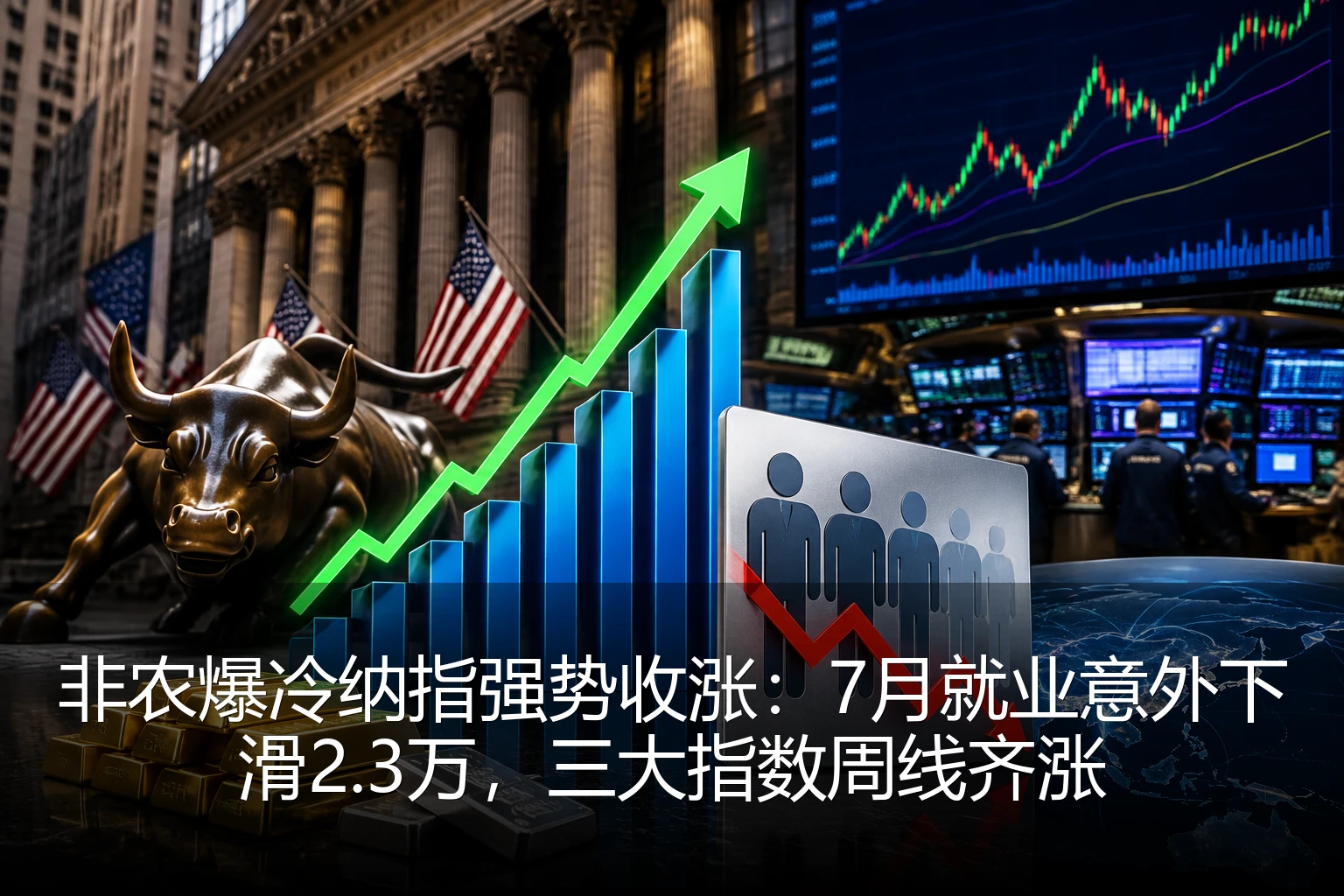
Reviewing this week, US stocks followed a volatile path of initial decline followed by a rally. The market opened with a significant surge on the first trading day of August: on Tuesday, August 4th, the S&P 500 index closed at a record high of 7736 points, the Dow Jones Industrial Average for the first time closed above 54,000, and the Nasdaq rose by 2.58% in a single day. The strong return of AI trading brought an estimated $3.5 trillion in market capitalization increase to the Nasdaq 100 index in just four trading days. On Wednesday and Thursday, the market briefly declined due to oil price rebounds and profit-taking, with the Dow falling over 460 points on Thursday, ending a five-day winning streak; however, it strengthened again on Friday, driven by non-farm payroll data and strong tech stocks.
On a weekly basis, the Nasdaq is poised to achieve its best weekly performance since May, thanks to the strong rebound in chip stocks. The iShares Semiconductor ETF (SOXX) rose by over 5% this week. The core logic supporting this rally remains earnings: as of this week, about 85% of S&P 500 components have released their Q2 earnings reports, with the proportion of earnings exceeding expectations reaching the highest level since 2021, and overall earnings growth potentially reaching the strongest level since 2021. Strong earnings have effectively alleviated market concerns about "overvaluation lacking support."
Stock and Sector Scan: A Tale of Two Extremes
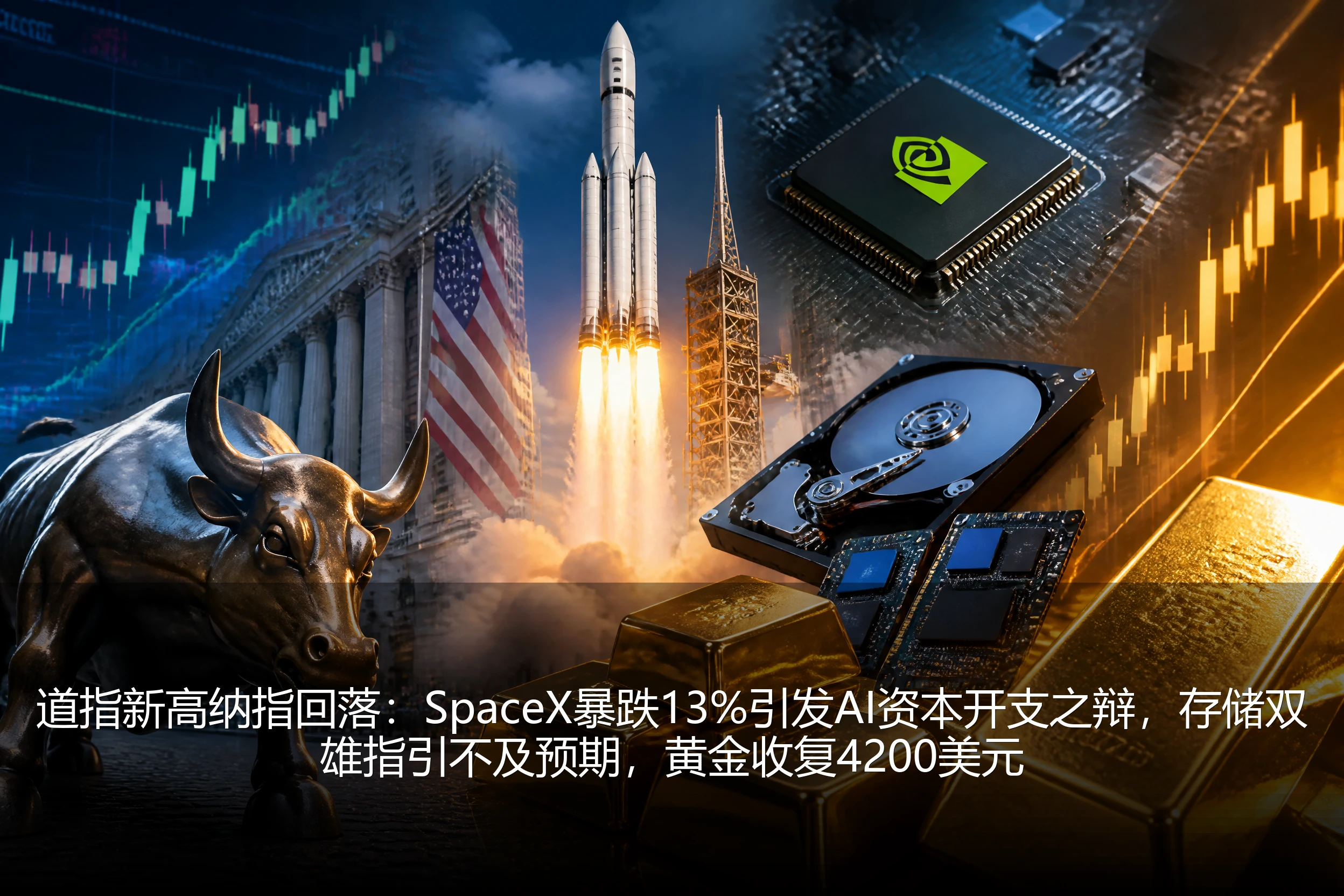
On Friday's trading floor, most large technology stocks rose, with SpaceX surging over 7%, and Nvidia, Amazon, and Tesla all rising by over 1%, while Meta and Microsoft saw slight increases. Semiconductor and optical communication concepts rose across the board, with the Philadelphia Semiconductor Index rising over 1%, and optical electronics surging over 13%, with Lumentum rising over 5% and Corning rising over 3%. At the individual stock level, Airbnb surged by 15.3% after both revenue and profit exceeded expectations; cloud security company Cloudflare rose by over 7% due to stable full-year and quarterly outlooks.
Notably, the previously strong memory sector experienced a "mood swing" during the day, rapidly declining after the opening bell and turning red across the board: as of the report, Seagate Technology fell 5.59%, SK Hynix fell 3.16%, Western Digital fell 3.11%, and Flash fell 0.61%. The memory sector's upward correction contrasts sharply with the overall semiconductor rebound, indicating that market division regarding the AI hardware narrative has not been resolved—on one hand, the argument that "accelerated computing demand far exceeds supply" supports valuations, while on the other hand, concerns about oversupply and domestic substitution remain a hanging cloud.
In commodities, international oil prices fell, with Brent crude dropping over 1%, and WTI crude futures for September delivery falling 0.6% to $76.85 per barrel. The market has high hopes for negotiations between the US and Iran regarding the Strait of Hormuz transit agreement; if the agreement is reached, approximately one-fifth of global oil and gas trade routes are expected to resume, and oil prices, which had surged to $113 due to geopolitical conflicts, are expected to decline significantly, thereby pressuring inflation expectations.
Outlook: Momentum to Chase, Risks Coexist
Regarding the future market, some Wall Street institutions have adopted a more positive stance. Tom Lee, a research director at Fundstrat Global Advisors, stated on Friday, "There will be a wave of chasing ahead, and I believe this wave will push stock indices to 7900 and 8000 this month." Market participants generally believe that the decline in oil prices, the cooling of interest rate hike expectations, and earnings exceeding expectations constitute a short-term triple positive.
However, risks cannot be ignored: U.S. inflation remains stubbornly above 3%, and Q2 GDP showed only a mild expansion of 1.5%. If subsequent inflation data rises again, expectations for a September rate hike may reaccelerate. Furthermore, well-known short-seller Michael Burry still holds short positions in Nvidia, Micron, and Palantir, believing the stock market is near a major top. Next week, Nvidia will release its earnings report on August 26th. As the "lead flag bearer" of the AI narrative, its guidance will directly determine market direction. August is historically a month of high volatility for U.S. stocks, so while chasing gains, investors must keep their seatbelts fastened.Implications for Asian Investors
For Asian investors, this week's market movements offer several insights: First, the sharp drop in the Dollar Index and the strengthening of precious metals highlight the value of a "USD-Gold" hedge in asset allocation. Second, the intraday reversal in the memory sector indicates a clear divergence within the AI hardware space, cautioning against chasing a single trend. Third, the Federal Reserve's policy path is highly data-dependent; every release of key indicators such as Nonfarm Payrolls and CPI can trigger sharp short-term fluctuations in the Nasdaq. Sound position management and risk control are more important than predicting the direction.
Overall, U.S. stocks remain strong under the narrative of "earnings supporting valuation," and the Nasdaq is expected to post its best performance since May on a weekly basis. However, weak employment data also reminds us that the U.S. economy is not without hidden concerns. For Asian investors, the best approach is to seize structural opportunities amidst volatility and dynamically adjust strategies anchored by data to navigate the August market.

Disclaimer: This article is for reference only and does not constitute investment advice. Investment involves risks, please invest cautiously.