

Dow Reaches New High as Nasdaq Declines: SpaceX Plunge of 13% Sparks Debate on AI Capital Expenditure, Storage Giants Miss Expectations, Gold Recovers to $4200
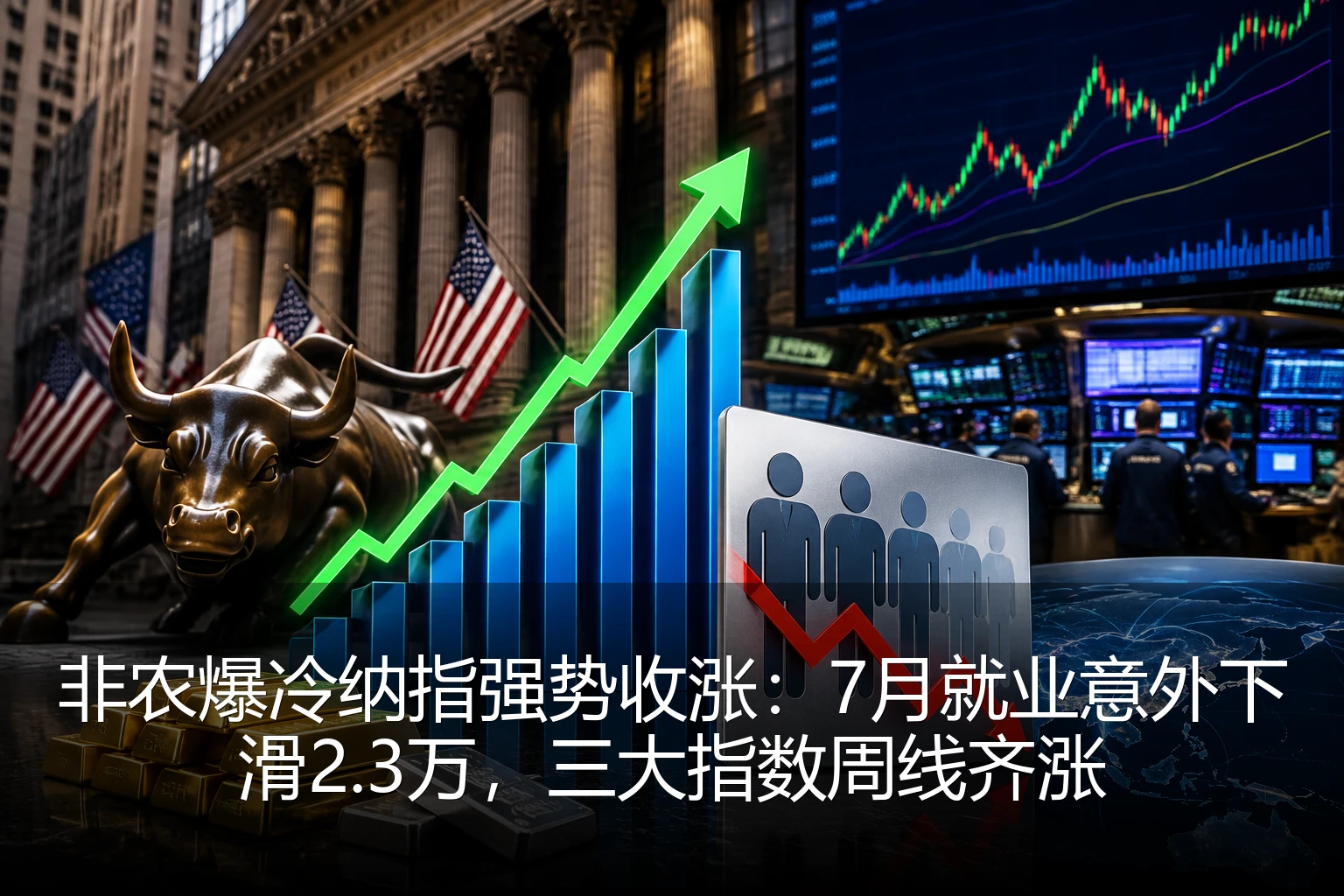
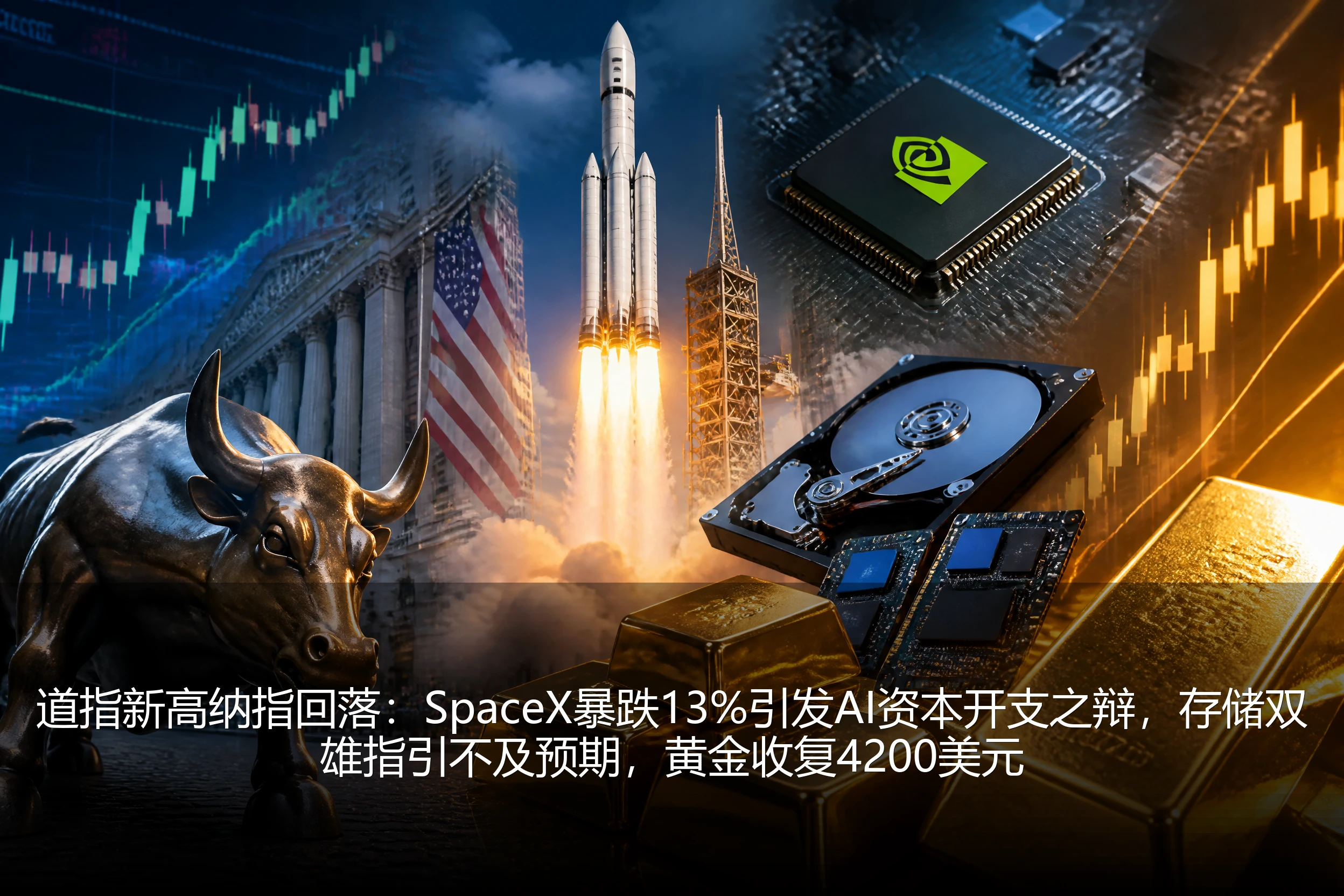
On Wednesday, August 5th, in Eastern Time, the three major US stock indices showed renewed divergence: the Dow Jones Industrial Average continued its streak of five consecutive gains to set a new high, while the Nasdaq Composite recorded its first decline in nearly five trading days, impacted by earnings reports from star stocks like SpaceX and AMD. The Dow rose by 263.24 points, up 0.49%, closing at 54,349.12; the Nasdaq fell by 221.55 points, down 0.83%, closing at 26,363.44; and the S&P 500 briefly hit an intraday high before retreating, closing down 0.17% at 7,723.55. This mix of gains and losses suggests a market tug-of-war between the "AI capital expenditure feast" and the "return of blue-chip value."
Dow's Strength: Healthcare and Consumer Blue Chips Lead the Rally
The Dow managed to reach a new high against the backdrop of weakness in large-cap technology stocks, mainly due to sector rotation within its components. Pharmaceutical giant Amgen saw its second-quarter sales increase by 9% year-over-year, leading to a stock price surge of 4.6%, contributing over 100 points to the Dow's rise; Eli Lilly raised its full-year revenue guidance, causing its stock to jump 4.86%; and Disney's third-quarter earnings surpassed expectations, leading to a 3.65% stock gain. The healthcare sector as a whole closed up 1.3%, becoming one of the best-performing sectors of the day.
Meanwhile, the banking sector saw widespread gains—Bank of America rose 0.87%, Goldman Sachs rose 0.72%, and Morgan Stanley rose 0.57%. Airlines also generally strengthened, with Boeing rising 1.28%. Capital shifted from previously high-flying technology stocks toward defensive blue chips and cyclical sectors, indicating that some investors are actively reducing portfolio volatility exposure during this high-index period. Ross Mayfield, an investment strategist at Baird, described the past few trading days as a "strong return of market animal spirits," with the three indices achieving their strongest four-day cumulative performance since April 2025.
Nasdaq Under Pressure: SpaceX's First Earnings Report Ignites the AI CapEx Debate
The core drag on the Nasdaq's decline came from SpaceX and AMD. SpaceX released its first quarterly report since its June listing: revenue nearly doubled, and operating losses narrowed, with strong growth in Starlink satellite communications and AI businesses. However, the company disclosed that its second-quarter capital expenditure surged sixfold year-over-year to $18.4 billion, with the vast majority directed toward AI data centers and similar operations, far exceeding analyst expectations. Investors worried about the sustainability of this spending pace, causing the stock to plummet 13.61% that day, wiping out approximately $225.2 billion in market value in a single day, setting a new post-listing closing low. What made bulls even more nervous was the upcoming expiration of the post-IPO lockup period for the company's stock starting on Thursday, making short-term selling pressure unavoidable.
AMD's situation was even more representative. Although the company's quarterly revenue guidance was above market expectations, reflecting robust AI demand, the stock still fell sharply by 7%. The market is seeking stronger evidence that massive AI investments translate into faster earnings growth rather than just meeting expectations. "Marginal disappointment after expectations are met" is becoming a common predicament for many companies in the AI supply chain.
Storage Giants: Impressive Earnings, Yet Disappointing Guidance Storage chip stocks experienced a broad decline today, with the Philadelphia Semiconductor Index dropping by 1.40%. SanDisk's second-quarter revenue surged by 372% year-over-year to $8.97 billion, beating expectations of $8.6 billion; adjusted earnings per share reached $39.25, a 135-fold increase from $0.29 a year ago, with an adjusted gross margin as high as 84.6%. However, the company's guidance for the median revenue in the first quarter of fiscal year 2027 was approximately $10.55 billion, falling short of the analysts' expectation of $11.16 billion, causing the stock to drop nearly 5% after hours. Western Digital reported second-quarter revenue of $3.747 billion, a 44% year-over-year increase, with adjusted earnings per share at $3.56, up over 100% year-over-year, and a gross margin rising to 54.4%. Yet, the company's guidance of approximately $4.1 billion for the next quarter also failed to meet the high expectations for AI hardware, leading to a decline of over 10% after hours. Although the fundamentals of the storage industry, characterized by rising volume and price, are solid, the stock price has already priced in optimistic expectations, making a valuation correction inevitable if guidance shows any flaws. Nvidia surges against the trend: The power of one Musk statement. Amid the general decline, Nvidia was the biggest highlight among technology stocks today, closing up 3.43% and achieving five consecutive gains, leading in trading volume across the market. The catalyst came from Musk's public statement: future AI computing infrastructure built by SpaceX will exclusively use Nvidia chips. This endorsement further solidified Nvidia's position as the "shovel seller" in the AI computing ecosystem. In contrast, Google's parent company, Alphabet, announced a major personnel change in its AI division—Chief Scientist Jeff Dean, who had been with the company for 27 years, resigned, causing the stock price to fall by over 4%. Macro data softens, cooling expectations for a September rate hike. In terms of economic data, the July ADP private sector employment report showed only 44,000 new jobs, far below the market expectation of 75,000, and a noticeable drop from the revised 95,000 in June, casting a shadow over the official nonfarm payroll data later this week. The U.S. Institute for Supply Management's (ISM) July services sector index rose slightly to 54.1, slightly below the expected 54.5, with the employment sub-index weakening. Overall, signs of a cooling labor market are becoming increasingly evident. However, the statements from Federal Reserve officials remain somewhat "hawkish." Board member Lisa Cook warned of sticky inflation during a speech in Anchorage, stating, "I am prepared to take a tightening action if necessary"; Minneapolis Fed President Kashkali also indicated that it is time to begin a slow rate hike. Nevertheless, against the backdrop of softening employment data and falling oil prices, the market's pricing for a September rate hike has fallen from 58.3% a week ago to 54.9%. Short-to-medium-term U.S. Treasury yields declined slightly, with the 2-year T-note at 4.178% and the 10-year T-note at 4.616%. Hormuz Strait shows signs of moderation, gold surges to reclaim $4200. On the geopolitical front, news emerged of "professional and progressive" negotiations between Iran and Oman regarding the safe passage routes for commercial vessels in the Strait of Hormuz, with both sides agreeing on the geographical coordinates of the proposed new routes. Analysts believe that once an agreement is reached, it will significantly ease shipping risks and oil price premiums in the Middle East. On the day, WTI crude oil futures fell by 0.73% to $75.22 per barrel, while Brent crude rose slightly by 0.11% to $79.45 per barrel. Safe-haven assets shine: COMEX gold futures surged over 3.6%, regaining the $4,200/ounce level, while silver futures rose over 3% in tandem. The US Dollar Index slightly decreased by 0.18% to near 99.68. The dual effect of easing geopolitical tensions and cooling interest rate hike expectations is driving precious metals to move independently.
Pressure on Chinese concept stocks and the Asian investor perspective
Most popular Chinese concept stocks declined on the day, with the Nasdaq China Golden Dragon Index falling by 1.09%. Ke, Ctrip, Baidu, and JD fell by over 1%, while Xpeng Motors, Bilibili, and Nio fell by over 2%, and Kingsoft Cloud fell by over 4%; however, New Oriental and TAL rose by over 1% against the trend. For Asian investors, the current pattern of "divergence between the Dow and Nasdaq" in US stocks warrants caution: on one hand, the high valuations of AI-related stocks require continuously exceeding expectations in earnings to be justified, and the experiences of leaders in space exploration and memory chips have issued warning signals; on the other hand, the inflow of funds into undervalued sectors such as healthcare and banking suggests that market style may be shifting from "extreme growth" to "balanced allocation." Michael Burry, the originator of the "big short," further warned that the rally driven by the current AI boom could ultimately lead to a sharp correction similar to that of 1987.
Operationally, it is suggested that Asian investors appropriately control the concentration of technology positions during the Nasdaq's high-level volatility and pay attention to the official non-farm payrolls report and changes in interest rate hike expectations before the September FOMC meeting this Friday; gold and defensive sectors can be considered as hedging tools for portfolio inclusion. Short-term market volatility is increasing, and the risk of chasing high prices is rising; strategically deploying on pullbacks and managing risks remain key to navigating the current market. (This article is compiled based on public information and does not constitute investment advice.)

Disclaimer: This article is for reference only and does not constitute investment advice. Investment involves risks, please invest cautiously.